Brazilianist | Brasilien
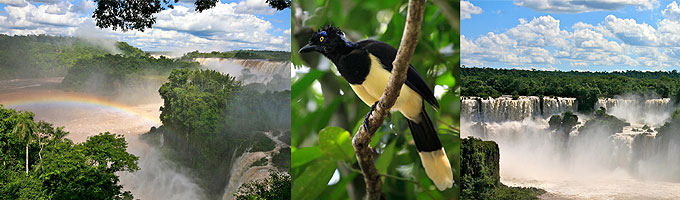
Das Land Brasilien liegt im Osten von Südamerika und hat ca. 190 Mio. Einwohner auf einer Fläche von 8.514.215 km². Die Hauptstadt ist Brasília. Regierungschef von Brasilien ist Präsidentin Dilma Rousseff. Die dortige Amtssprache ist Portugiesisch, weil in der Kolonialzeit die Portugiesen die Kolonialherren über die Brasilianer waren. 1822 hat Brasilien sich von Portugal unabhängig erklärt und 1825 wurde die Erklärung anerkannt.
Brasilien ist durchzogen von den riesigen Regenwäldern des Amazonas und grenzt an Französisch-Guayana, Suriname, Guyana, Venezuela, Kolumbien, Peru, Bolivien, Paraguay, Argentinien und Uruguay. Des Weiteren gibt es in Brasilien einen 2.994 m hohen Berg mit dem Namen Pico da Neblina, was so viel heißt wie "Nebelspitze" und einen dreimal größeren Wasserfall als die Niagarafälle, die Iguaçu-Wasserfälle. Auch findet man vor Brasilien, in ca. 800 km Entfernung von der Küste, unter anderem die ehemalige Sträflingskolonie Fernando de Noronha. Als größte Insel ist Marajó zu nennen, die zwischen der Mündung des Amazonas und der Meeresbucht Rio Pará liegt und ca. 48.000 km² groß ist.
Da Brasilien zwischen 5° nördlicher und 34° südlicher Breite liegt, herrscht hier ein eher tropisches Klima. Besonders im Raum des Amazonas sind zudem viele Niederschläge zu verzeichnen. In den höheren Lagen im Süden Brasiliens gibt es im Winter auch Schnee.
Brasilien ist mit bislang ca. 55.000 entdeckten Blütenpflanzenarten, 3.000 Süßwasserfisch-, 51 Primaten-, 730 Reptilien und 864 Amphibienarten das artenreichste Land der Erde. Allerdings ist ein Großteil der Arten vom Aussterben bedroht, da viele Waldflächen inzwischen abgeholzt wurden. Der Regenwald im Raum des Amazonas ist einer der größten zusammenhängenden Waldgebiete der Erde. hier wurden bislang rund 2.500 Baumarten entdeckt. Zudem ist das Amazonasgebiet bekannt für die dort lebenden Papageien, Tukane und Kolibris, sowie für die zahlreichen Insekten und Schmetterlingsarten. Durch Raubbau und Erweiterung der Ackerflächen, unter anderem mit geplanten Flächenbränden, sind der Regenwald und damit auch die dort lebende Fauna in ihrer Existenz gefährdet.
Als Touristenhighlight ist der berühmte Karneval von Rio de Janeiro sehr beliebt. Hier feiert die ganze Stadt mit großen Umzügen und Sambatänzen ab dem Freitag vor Aschermittwoch. Als letzte große Sehenswürdigkeit ist die große Christus-Statue "Cristo Redentor" zu nennen. Diese steht auf dem Gipfel des 710 m hohen Corcovado im Tijuca-Nationalpark.